

Insights, news & events
-
News Details

Cross-Border Arbitration Service and Enforcement: HOZU Capital Joins Arbitration Practitioners to Discuss Emerging Issues

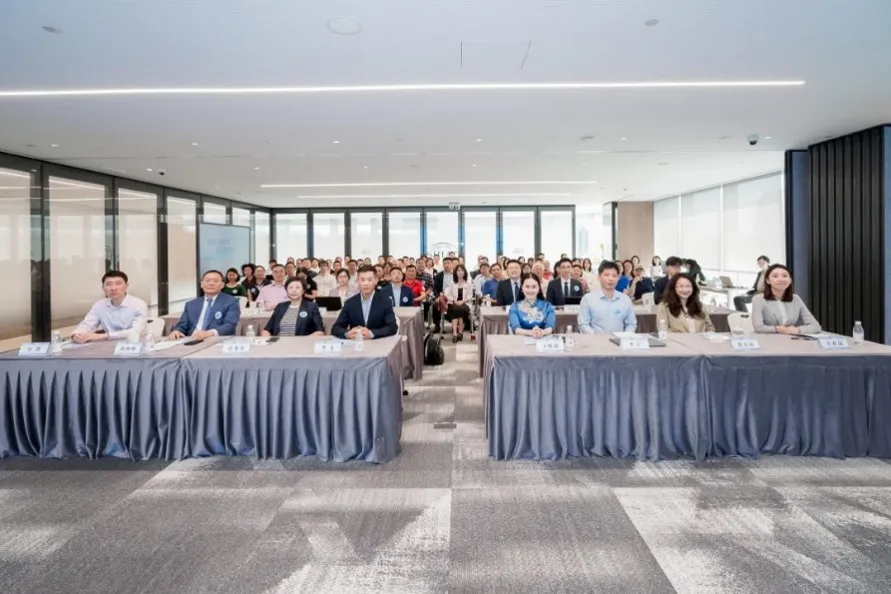
As a key part of CIETAC’s 2026 China Arbitration Week, HOZU Capital, together with the China Arbitration Institute of China University of Political Science and Law (CUPL), the Beijing Arbitration Commission (BAC), and the Beijing International Dispute Resolution Development Center (BIDRC), co-hosted the seminar “Service in Arbitration from a Cross-Border Enforcement Perspective: Due Process, Proper Notice and Enforcement Review” in Beijing on September 19, 2026. The seminar brought together more than 160 experts from arbitral institutions, universities, research institutes, and law firms in China and abroad to discuss key practical issues concerning service in international arbitration, due process, and cross-border enforcement. The keynote and roundtable sessions focused respectively on “Service in Arbitration and Due Process from a Cross-Border Enforcement Perspective” and “From Service of Process to Enforcement of Awards: Challenges of Service in International Arbitration."

The keynote session was moderated by Liu Li, Vice Dean of the School of International Law and Deputy Director of the CAI. Haoliang Zhang, Deputy Secretary-General of BAC/BIAC; Shasha Qiao, Deputy Director of the International Case Division of CIETAC; Song Lu, Professor at the Law School of China Foreign Affairs University; and Xinli Du, Professor at the School of International Law of CUPL and Honorary Director of the Institute of Arbitration Research, addressed these issues from the perspectives of arbitral institutional practice, theoretical analysis, and the review of award enforcement. Their discussions covered reasonable efforts to effect service, practical considerations for multi-channel notice, preservation of evidence of notice, and, ultimately, protection of the right to be heard through actual notice. Speakers emphasized that service should be assessed not merely by formal compliance, but by whether it was reasonably designed to ensure that parties were aware of the proceedings and had a full opportunity to participate and present their case.


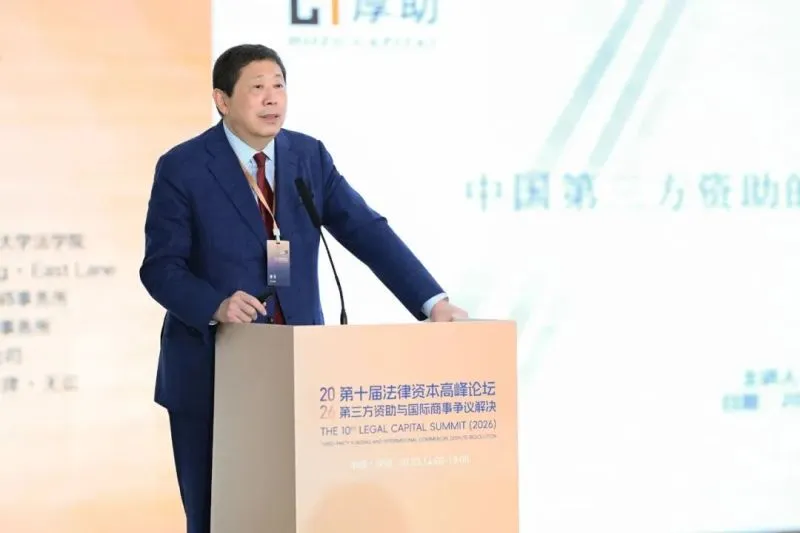
HOZU Capital’s Head of International Business, Tiana Zhang, shared a third-party funder’s perspective on how service-related risks can affect cross-border enforcement and funding decisions. Drawing on legal standards and case law across major arbitration jurisdictions, she emphasized that formal completion of service does not necessarily amount to proper notice; the key consideration is whether the parties had actual or effective notice of the proceedings and a meaningful opportunity to participate and present their case. She explained that funders therefore examine the legal basis, methods and evidentiary record of service, as well as the standards applied in potential enforcement jurisdictions, to identify procedural gaps and assess their impact on enforceability. These risks are then considered alongside the merits, recovery prospects, enforcement costs, timeline and expected returns in determining whether and how to fund a case, structure the investment and price the associated risk.

The subsequent roundtable, “From Service of Process to Enforcement of Awards: Challenges of Service in International Arbitration,” was moderated by Lijun Cao, Partner at Zhong Lun Law Firm (Beijing). Dr. Bjoern Etgen of NEXUS Arbitrator Chambers, Chan Hock Keng of WongPartnership, Xin Liu of Freshfields, Clemency Wang of White & Case, and Yuwu Liu of King & Wood Mallesons shared practical perspectives from Germany, Singapore and Malaysia, the UK and Hong Kong SAR, the US, and Mainland China, respectively, discussing cross-border service, due process, substituted service, and related risks in setting-aside and enforcement proceedings.
Going forward, HOZU Capital will continue to engage closely with the arbitration community, contribute a third-party funding perspective to key issues in international arbitration and cross-border enforcement, and foster closer collaboration between funders and dispute-resolution practitioners.



Unit 2901, North Tower, Beijing Kerry Centre, Chaoyang District, Beijing, China
Room 1503, The Henderson, 2 Murray Road, Central, Hong Kong
Room 1503, The Henderson, 2 Murray Road, Central, Hong Kong
© 2025 HOZU. All rights reserved.